
Repositioning & Creative Strategy
Creative Strategy & Repositioning focuses on redefining how brands are perceived through brand strategy, positioning, identity systems, and market differentiation. This work helps brands increase demand, elevate pricing, and stand out in saturated markets through cohesive storytelling, design, and experience-led touchpoints.
Creative strategy is an intimate process. It begins long before design, campaigns, or execution and often starts with undoing assumptions a brand has been operating under for years. This work is about listening closely, asking uncomfortable questions, and identifying the quiet misalignments between how a brand sees itself and how it is actually experienced.
Repositioning requires restraint as much as vision. It’s the practice of narrowing focus to sharpen meaning, defining what a brand must let go of in order to become more legible, more desirable, and more valuable. In saturated markets, growth doesn’t come from saying more. It comes from saying the right thing, to the right audience, at the right level of intention.
This process treats brands as living systems rather than products. Audience behavior, cultural context, pricing psychology, and emotional resonance are all considered before a single visual or message is introduced. Strategy here is not about trends or performance hacks, but about establishing a position that can sustain growth over time and across touchpoints.
Once the foundation is set, strategy becomes the lens through which everything else is evaluated. Campaigns, identities, partnerships, and narratives are no longer isolated efforts, but expressions of a singular point of view. The result is coherence. A brand that feels considered, confident, and difficult to replace.
This strategic foundation can manifest through brand identity systems, strategic repositioning, campaigns, content, partnerships, packaging, and market-facing initiatives—each chosen intentionally to reinforce perception, demand, and long-term value.
Clients
Sherwood Island Oysters
Selected Projects
Creative Strategy

Sherwood Oysters
Sherwood Island Oysters approached me with a familiar challenge: “We want to sell more.” In a category where purchasing decisions are often deferred to raw bars and chef recommendations, the real issue wasn’t demand, but indistinction. Oysters were being treated as a commodity rather than a brand.
The strategic opportunity was repositioning. Instead of competing within the crowded middle of the market, Sherwood Island Oysters was elevated into a luxury category. The brand shifted from relying solely on distribution and restaurant reputation to owning a direct relationship with consumers. Oysters were reframed not just as food, but as a lifestyle product—prestigious, experiential, and collectible.
This repositioning came to life through a full brand overhaul and multi-touchpoint strategy. I led the rebrand to reflect a refined, high-end aesthetic grounded in the oyster’s pristine ecosystem. Luxury-forward B2C packaging was developed to solve a gap in the market, offering pre-shucked, pasteurized oysters that felt intentional and giftable rather than utilitarian. The brand extended beyond packaging into exclusive merchandise, digital presence, campaign work, and thoughtfully curated collaborations and events designed to create cultural visibility.
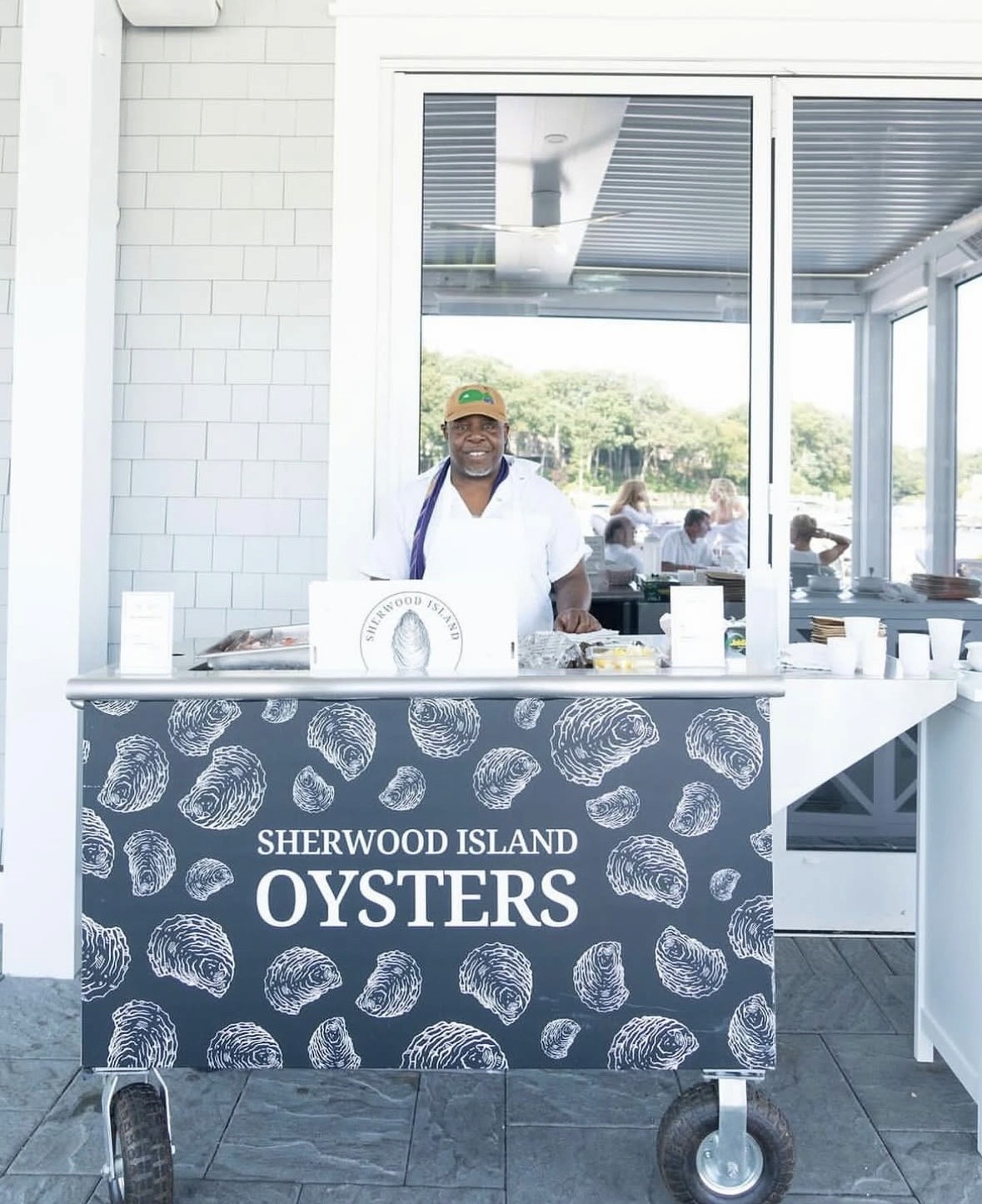
To bring the brand into the physical world, we introduced the Shuck Truck, a mobile oyster cart that functioned as both an experiential activation and a rolling brand footprint. Chef collaborations, private tastings, and events brought the market directly to the public, transforming Sherwood Oysters from a supplier into a destination brand. The strategy allowed consumers to engage with the brand even before purchase, building desire, trust, and loyalty.
Through strategic repositioning, Sherwood Island Oysters scaled both sales and pricing, moving from a product within a saturated category to a luxury brand with a clear identity, voice, and long-term growth trajectory.

Repositioning often begins in the space before action. The product may already be strong, the audience already present, yet something feels misaligned. Growth slows not because of a lack of effort, but because the brand is being felt differently than it intends. This work focuses on understanding that gap. On listening closely to how value is perceived, where desire softens, and what signals are being missed. From this clarity, a new posture emerges. One that allows the brand to move forward with intention, setting its presence, pricing, and narrative from alignment rather than urgency.